

Selecting the best Gigabyte laptop means aligning yourself with a brand known for engineering-focused design, uncompromising performance, and enthusiast-level customization. If you’re a gamer chasing ultra-smooth frame rates, a 3D artist working with massive datasets, a video editor exporting high-resolution timelines, or a system builder looking for thermal efficiency with desktop-level power, this guide is written for you.
We’ve built this article to serve as your technical partner—we decode the specs, you decide the fit. Gigabyte’s laptop ecosystem, which includes the AORUS, AERO, and G5/G7 series, speaks to creators, gamers, and developers who want precision-built machines with minimal compromise. Unlike trend-driven models from lifestyle brands, Gigabyte laptops prioritize performance density, cooling headroom, and professional-grade panels. That’s what sets them apart.
Still, there’s a learning curve. With overlapping specs, alpha-numeric model names (AERO 16 OLED BMF, AORUS 17X AZG, G6 KF-H3US865SH…), and dense configuration options, it’s easy to get lost. You’re not alone in that.
Let’s talk challenges. Gigabyte doesn’t chase ultrathin trends or ultra-light builds. These machines lean into substantial cooling systems, expandable memory, and robust GPU support. As a result, they can be heavier, louder, or less portable than ultraportables. But what they offer in return is thermal stability, upgradable architecture, and desktop-class power efficiency. If you’re expecting featherweight elegance, you may want to reconsider. If you’re aiming for a high-performance workstation that fits in a backpack, you’re in the right place.
We evaluate each Gigabyte laptop by a focused set of criteria: CPU generation (H- or HX-class for performance), GPU tier (RTX 4060 to 4090), display type (IPS vs OLED), display resolution (FHD, QHD, 4K), thermal design (vapor chamber vs heat pipe), memory slots (dual-channel upgradability), and port configuration (Thunderbolt 4, HDMI 2.1, etc.). Use cases span AAA gaming, machine learning model training, 3D animation rendering, video production, and virtualization. For inclusion in this guide, models must offer at least a Core i7 or Ryzen 7 processor, 16GB DDR5 RAM (upgradable), a 1TB NVMe SSD, and an RTX 4060 GPU or higher.
Let’s break down the lineup.
AORUS laptops are performance-first machines tailored for gaming and hybrid creative use. The AORUS 17X and AORUS 15 pair high-refresh-rate QHD displays with advanced NVIDIA GPUs and high-wattage CPU configurations, including Intel HX processors. These laptops are built with large vapor chamber cooling systems, mechanical or optical-mech keyboards, and sturdy metal chassis. They suit users running GPU-heavy games, compiling real-time shaders, or pushing high-res VR simulations. Expect QHD+ 240Hz refresh rates, 100% DCI-P3 color spaces, and G-Sync compatibility in flagship models.
AERO models are creator-centric. The AERO 16 OLED is a standout—equipped with 4K+ Samsung AMOLED panels, Pantone validation, factory calibration, and a full DCI-P3 color gamut. Content creators, photographers, and editors will find these displays color-accurate, HDR-capable, and ideal for Adobe workflows. These machines also maintain strong RTX GPU support, but prioritize thermals and visual fidelity over frame rates. They’re built for Adobe Premiere, Lightroom, DaVinci Resolve, and 3D software pipelines.
Then there’s the G5 and G7 series, which target mid-range users who want RTX-level graphics without breaking the bank. Models like the G5 KF or G7 MD feature 144Hz IPS displays, 12th–13th Gen Intel Core i7 CPUs, and RTX 4060/4070 GPUs. These laptops are highly suitable for students in engineering or media design programs, or for gamers who want solid 1080p performance with ray tracing and DLSS support. They’re also some of the more repair-friendly and upgrade-friendly options in the Gigabyte stable.
Display tuning varies by line. AERO laptops bring OLED and 10-bit HDR compatibility, excellent for color-accurate work. AORUS models, meanwhile, stick to high-refresh IPS or QHD screens that target low latency and wide viewing angles—ideal for gaming and real-time 3D work. Brightness, color accuracy, PWM behavior, and panel uniformity are included in our analysis, so you know exactly what kind of screen experience you’re buying into.
You’ll also find advanced connectivity across most models: Thunderbolt 4 (or USB-C Gen 3.2), HDMI 2.1, full-size SD readers on AERO units, and dedicated Ethernet ports. The keyboards are typically tactile, well-spaced, and feature per-key RGB lighting in gaming models, with toned-down white backlighting in creator lines.
You can also have a look at Best Razer Blade Laptops in addition to the best MSI Laptops.
Best 2026 Gigabyte Laptops:
Contents
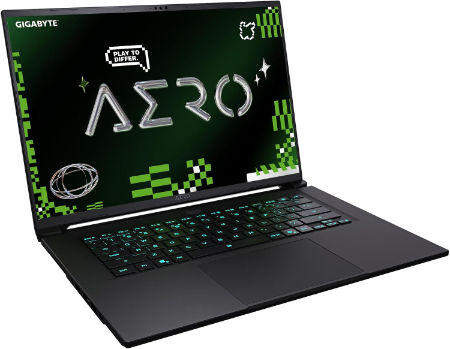
- GIGABYTE AERO X16 Ryzen AI 9 465 RTX 5070 12GB 16 inch WQXGA 165Hz
- AORUS ELITE 16 Core Ultra 9 275HX RTX 5070 16 inch WQXGA 165Hz
- AORUS MASTER 16 Intel Core Ultra 9 275HX RTX 5070 Ti 16 inch OLED 240Hz
- AORUS MASTER 16 Intel Core Ultra 9 275HX RTX 5080 16 inch OLED 240Hz
- AORUS MASTER 16 Intel Core Ultra 9 275HX RTX 5090 16 inch OLED 240Hz
- AORUS MASTER 16 GEN 2 Ryzen 9 9955HX3D RTX 5090 16 inch 2.5K OLED 240Hz
- AORUS MASTER 18 Core Ultra 9 275HX RTX 5090 18 inch Mini LED 240Hz
- GIGABYTE GAMING A16 PRO Core 7 240H RTX 5070 Ti 16 inch WQXGA 165Hz
- GIGABYTE GAMING A16 PRO Core 7 240H RTX 5080 16 inch WQXGA 165Hz
- GIGABYTE GAMING A16 Ryzen 5 150 RTX 5050 16 inch WUXGA 165Hz
- GIGABYTE GAMING A16 Ryzen 7 170 RTX 5060 16 inch WUXGA 165Hz
- GIGABYTE GAMING A16 Ryzen 7 260 RTX 5070 16 inch WQXGA 165Hz
- GIGABYTE GAMING A16 Ryzen 7 260 RTX 5070 16 inch WUXGA 165Hz
- GIGABYTE GAMING A18 PRO Core 7 240H RTX 5080 18 inch WQXGA 165Hz
- GIGABYTE GAMING A18 Ryzen 7 260 RTX 5070 18 inch WQXGA 165Hz
- More Laptop suggestions
GIGABYTE AERO X16 Ryzen AI 9 465 RTX 5070 12GB 16 inch WQXGA 165Hz |
|
|---|---|
 Check This On Amazon |
|
| CPU | AMD Ryzen AI 9 465, 10 cores, 20 threads, up to 5.0 GHz |
| GPU | NVIDIA GeForce RTX 5070 Laptop GPU, 12GB GDDR7, up to 85W graphics power |
| Display Size | 16 inch, 16:10 |
| Display Resolution | WQXGA 2560 × 1600 IPS, 165Hz, 3ms, 100% sRGB, 500 nits typical, Pantone Validated |
| RAM | Up to 64GB DDR5 5600MHz, 2 SO DIMM slots |
| Storage Space | Up to 4TB PCIe NVMe SSD across 2 M.2 slots, one PCIe Gen4 x4 and one Gen4 x2 |
| Operating System | Windows 11 Home or Windows 11 Pro |
| Ports | USB4 Type C with DisplayPort 1.4 and Power Delivery 3.0, USB Type A 3.2 Gen 1, USB Type A 2.0, HDMI 2.1, RJ45 Ethernet, 3.5mm audio combo, DC in |
| Dimensions (L x W x H) | 9.87 × 13.98 × 0.66 to 0.79 inches (depth × width × height) |
| Weight | 4.19 lb |
| Pros | Light 16 inch chassis; accurate 165Hz display with full sRGB coverage; RTX graphics support gaming and GPU accelerated creative software; memory and SSD expansion. |
| Cons | battery life varies with GPU use. |
AORUS ELITE 16 Core Ultra 9 275HX RTX 5070 16 inch WQXGA 165Hz |
|
|---|---|
 Check This On Amazon |
|
| CPU | Intel Core Ultra 9 275HX, 24 cores, 24 threads, up to 5.4 GHz |
| GPU | NVIDIA GeForce RTX 5070 Laptop GPU, 8GB GDDR7, up to 115W with Dynamic Boost |
| Display Size | 16 inch, 16:10 |
| Display Resolution | WQXGA 2560 × 1600 IPS, 165Hz, 3ms, 100% sRGB, 400 nits, G SYNC and Dolby Vision support |
| RAM | Up to 64GB DDR5 5600MHz, 2 SO DIMM slots |
| Storage Space | Up to 4TB PCIe NVMe SSD across 2 PCIe Gen4 x4 M.2 slots |
| Operating System | Windows 11 Home or Windows 11 Pro |
| Ports | Thunderbolt 5 Type C with USB4, DisplayPort 2.1 and Power Delivery 3.0, Thunderbolt 4 Type C, HDMI 2.1, USB Type A 3.2 Gen 2, MicroSD UHS II, RJ45 Ethernet, 3.5mm audio combo, DC in |
| Dimensions (L x W x H) | 10.00 × 14.06 × 0.79 to 1.02 inches (depth × width × height) |
| Weight | 5.07 lb (approximately 2.3 kg) |
| Pros | High refresh 16 inch panel with full sRGB coverage; strong CPU; upgradeable DDR5 memory and dual M.2 storage. |
| Cons | |
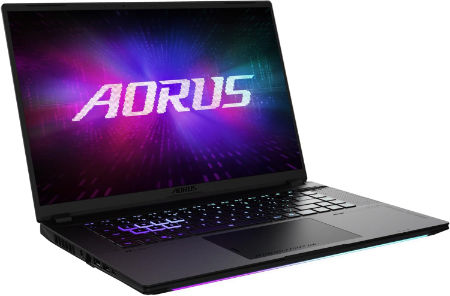
AORUS MASTER 16 Intel Core Ultra 9 275HX RTX 5070 Ti 16 inch OLED 240Hz |
|
|---|---|
 Check This On Amazon |
|
| CPU | Intel Core Ultra 9 275HX, 24 cores, 24 threads, up to 5.4 GHz |
| GPU | NVIDIA GeForce RTX 5070 Ti Laptop GPU, 12GB GDDR7, up to 140W with Dynamic Boost |
| Display Size | 16 inch, 16:10 |
| Display Resolution | WQXGA 2560 × 1600 OLED, 240Hz, 1ms, 100% DCI P3, up to 500 nits peak, DisplayHDR True Black 500 |
| RAM | Up to 64GB DDR5 5600MHz, 2 SO DIMM slots |
| Storage Space | Up to 4TB PCIe NVMe SSD, one PCIe Gen5 M.2 slot and one PCIe Gen4 x4 M.2 slot |
| Operating System | Windows 11 Home or Windows 11 Pro |
| Ports | Thunderbolt 5 Type C with USB4, DisplayPort 2.1 and Power Delivery 3.0, Thunderbolt 4 Type C with USB4, DisplayPort 1.4 and Power Delivery 3.0, HDMI 2.1, USB Type A 3.2 Gen 2, MicroSD UHS II, RJ45 Ethernet, 3.5mm audio combo, DC in |
| Dimensions (L x W x H) | 10.00 × 14.06 × 0.91 to 1.18 inches (depth × width × height) |
| Weight | 5.51 lb (approximately 2.5 kg) |
| Pros | Strong gaming and design performance; 12GB VRAM; high refresh OLED display; good connectivity and component expansion. |
| Cons | heavy premium gaming laptop |
AORUS MASTER 16 Intel Core Ultra 9 275HX RTX 5080 16 inch OLED 240Hz |
|
|---|---|
Check This On Amazon |
|
| CPU | Intel Core Ultra 9 275HX, 24 cores, 24 threads, up to 5.4 GHz |
| GPU | NVIDIA GeForce RTX 5080 Laptop GPU, 16GB GDDR7, up to 175W with Dynamic Boost |
| Display Size | 16 inch, 16:10 |
| Display Resolution | WQXGA 2560 × 1600 OLED, 240Hz, 1ms, 100% DCI P3, up to 500 nits peak, DisplayHDR True Black 500 |
| RAM | Up to 64GB DDR5 5600MHz, 2 SO DIMM slots |
| Storage Space | Up to 4TB PCIe NVMe SSD, one PCIe Gen5 M.2 slot and one PCIe Gen4 x4 M.2 slot |
| Operating System | Windows 11 Home or Windows 11 Pro |
| Ports | Thunderbolt 5 Type C with USB4, DisplayPort 2.1 and Power Delivery 3.0, Thunderbolt 4 Type C with USB4, DisplayPort 1.4 and Power Delivery 3.0, HDMI 2.1, USB Type A 3.2 Gen 2, MicroSD UHS II, RJ45 Ethernet, 3.5mm audio combo, DC in |
| Dimensions (L x W x H) | 10.00 × 14.06 × 0.91 to 1.18 inches (depth × width × height) |
| Weight | 5.51 lb (approximately 2.5 kg) |
| Pros | High end gaming and creator GPU; 16GB graphics memory; fast color rich OLED panel; Thunderbolt 5 and expandable memory. |
| Cons | Premium pricing; bulky charging adapter; high power draw can limit unplugged gaming time. |
AORUS MASTER 16 Intel Core Ultra 9 275HX RTX 5090 16 inch OLED 240Hz |
|
|---|---|
Check This On Amazon |
|
| CPU | Intel Core Ultra 9 275HX, 24 cores, 24 threads, up to 5.4 GHz |
| GPU | NVIDIA GeForce RTX 5090 Laptop GPU, 24GB GDDR7, up to 175W with Dynamic Boost |
| Display Size | 16 inch, 16:10 |
| Display Resolution | WQXGA 2560 × 1600 OLED, 240Hz, 1ms, 100% DCI P3, up to 500 nits peak, DisplayHDR True Black 500 |
| RAM | Up to 64GB DDR5 5600MHz, 2 SO DIMM slots |
| Storage Space | Up to 4TB PCIe NVMe SSD, one PCIe Gen5 M.2 slot and one PCIe Gen4 x4 M.2 slot |
| Operating System | Windows 11 Home or Windows 11 Pro |
| Ports | Thunderbolt 5 Type C with USB4, DisplayPort 2.1 and Power Delivery 3.0, Thunderbolt 4 Type C with USB4, DisplayPort 1.4 and Power Delivery 3.0, HDMI 2.1, USB Type A 3.2 Gen 2, MicroSD UHS II, RJ45 Ethernet, 3.5mm audio combo, DC in |
| Dimensions (L x W x H) | 10.00 × 14.06 × 0.91 to 1.18 inches (depth × width × height) |
| Weight | 5.51 lb (approximately 2.5 kg) |
| Pros | Very powerful Intel and RTX 5090 combination; bright 240Hz OLED; Thunderbolt 5 support; memory and storage expansion. |
| Cons | Large power adapter; high cost; high performance components can generate heat and reduce battery life under load. |
AORUS MASTER 16 GEN 2 Ryzen 9 9955HX3D RTX 5090 16 inch 2.5K OLED 240Hz |
|
|---|---|
Check This On Amazon |
|
| CPU | AMD Ryzen 9 9955HX3D, 16 cores, 32 threads, up to 5.4 GHz, 128MB L3 cache |
| GPU | NVIDIA GeForce RTX 5090 Laptop GPU, 24GB GDDR7, up to 175W with Dynamic Boost |
| Display Size | 16 inch, 16:10 |
| Display Resolution | WQXGA 2560 × 1600 OLED, 240Hz, 0.2ms, 100% DCI P3, up to 1000 nits peak, DisplayHDR True Black 1000 |
| RAM | Up to 64GB DDR5 5600MHz, 2 SO DIMM slots |
| Storage Space | Up to 4TB PCIe NVMe SSD, one PCIe Gen5 M.2 slot and one PCIe Gen4 x4 M.2 slot |
| Operating System | Windows 11 Home or Windows 11 Pro |
| Ports | HDMI 2.1, RJ45 Ethernet, USB Type A 3.2 Gen 2, USB4 Type C with DisplayPort 1.4 and Power Delivery 3.0, USB Type C 3.2 Gen 2 with DisplayPort 2.0 and Power Delivery 3.0, MicroSD UHS II, 3.5mm audio combo, DC in |
| Dimensions (L x W x H) | 10.05 × 14.06 × 0.75 to 0.96 inches (depth × width × height) |
| Weight | 5.07 lb (approximately 2.3 kg) |
| Pros | Flagship gaming performance; 24GB graphics memory; fast high contrast OLED display; strong cooling design and expandable system memory. |
| Cons | High purchase cost and power draw; the 330W class charger adds travel weight; battery runtime under heavy gaming will be limited. |
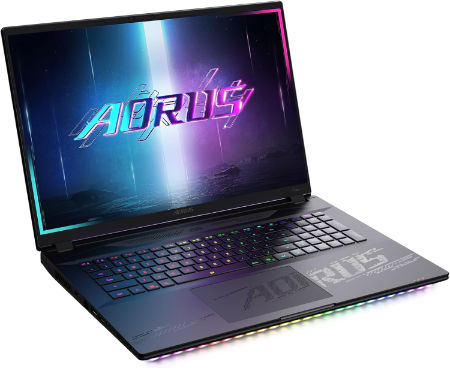
AORUS MASTER 18 Core Ultra 9 275HX RTX 5090 18 inch Mini LED 240Hz |
|
|---|---|
 Check This On Amazon |
|
| CPU | Intel Core Ultra 9 275HX, 24 cores, 24 threads, up to 5.4 GHz |
| GPU | NVIDIA GeForce RTX 5090 Laptop GPU, 24GB GDDR7, up to 175W with Dynamic Boost |
| Display Size | 18 inch, 16:10 |
| Display Resolution | WQXGA 2560 × 1600 Mini LED, 240Hz, 3ms, 100% DCI P3, up to 1200 nits, 2304 local dimming zones, DisplayHDR 1000 |
| RAM | Up to 128GB DDR5, 4 SO DIMM slots |
| Storage Space | Up to 6TB PCIe NVMe SSD across one PCIe Gen5 M.2 slot and two PCIe Gen4 x4 M.2 slots, RAID 0 support |
| Operating System | Windows 11 Home or Windows 11 Pro |
| Ports | Thunderbolt 5 Type C with USB4, DisplayPort 2.1 and Power Delivery 3.0, Thunderbolt 4 Type C with USB4, DisplayPort 1.4 and Power Delivery 3.0, HDMI 2.1, USB Type A 3.2 Gen 2, full size SD UHS II, RJ45 2.5Gb Ethernet, 3.5mm audio combo, DC in |
| Dimensions (L x W x H) | 11.30 × 15.78 × 1.00 to 1.22 inches (depth × width × height) |
| Weight | 7.72 lb (approximately 3.5 kg) |
| Pros | Very large bright Mini LED display; RTX 5090 performance; extensive memory and SSD expansion; premium port selection. |
| Cons | Heavy and bulky; large 400W adapter; likely best for desk based use rather than frequent travel. |
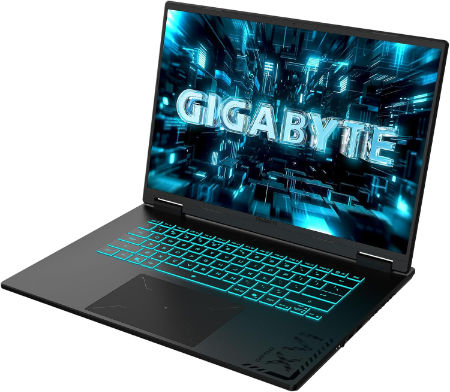
GIGABYTE GAMING A16 PRO Core 7 240H RTX 5070 Ti 16 inch WQXGA 165Hz |
|
|---|---|
 Check This On Amazon |
|
| CPU | Intel Core 7 240H, 10 cores, 16 threads, up to 5.2 GHz |
| GPU | NVIDIA GeForce RTX 5070 Ti Laptop GPU, 12GB GDDR7 |
| Display Size | 16 inch, 16:10 |
| Display Resolution | WQXGA 2560 × 1600 IPS, 165Hz, 3ms, 100% sRGB, 400 nits typical |
| RAM | 32GB LPDDR5X 5600MHz onboard memory |
| Storage Space | Up to 4TB PCIe NVMe SSD, 2 PCIe Gen4 x4 M.2 slots |
| Operating System | Windows 11 Home or Windows 11 Pro |
| Ports | HDMI 2.1, USB Type C with DisplayPort 1.4 and Power Delivery 3.0, USB Type A 3.2 Gen 1, USB Type A 2.0, RJ45 Ethernet, 3.5mm audio combo, DC in |
| Dimensions (L x W x H) | 10.33 × 14.11 × 0.77 to 0.90 inches (depth × width × height) |
| Weight | 5.07 lb (approximately 2.3 kg) |
| Pros | 12GB VRAM and a high refresh QHD plus display; useful for modern games, design software and GPU accelerated creation. |
| Cons | IPS contrast is lower than OLED |
GIGABYTE GAMING A16 PRO Core 7 240H RTX 5080 16 inch WQXGA 165Hz |
|
|---|---|
Check This On Amazon |
|
| CPU | Intel Core 7 240H, 10 cores, 16 threads, up to 5.2 GHz |
| GPU | NVIDIA GeForce RTX 5080 Laptop GPU, 16GB GDDR7 |
| Display Size | 16 inch, 16:10 |
| Display Resolution | WQXGA 2560 × 1600 IPS, 165Hz, 3ms, 100% sRGB, 400 nits typical |
| RAM | 32GB LPDDR5X 5600MHz onboard memory |
| Storage Space | Up to 4TB PCIe NVMe SSD, 2 PCIe Gen4 x4 M.2 slots |
| Operating System | Windows 11 Home or Windows 11 Pro |
| Ports | HDMI 2.1, USB Type C with DisplayPort 1.4 and Power Delivery 3.0, USB Type A 3.2 Gen 1, USB Type A 2.0, RJ45 Ethernet, 3.5mm audio combo, DC in |
| Dimensions (L x W x H) | 10.33 × 14.11 × 0.77 to 0.90 inches (depth × width × height) |
| Weight | 5.07 lb (approximately 2.3 kg) |
| Pros | High tier RTX 5080 GPU with 16GB VRAM; 165Hz WQXGA panel; strong gaming and 3D rendering potential. |
| Cons | Memory is onboard rather than SO DIMM upgradeable |
GIGABYTE GAMING A16 Ryzen 5 150 RTX 5050 16 inch WUXGA 165Hz |
|
|---|---|
Check This On Amazon |
|
| CPU | AMD Ryzen 5 150, 6 cores, 12 threads, up to 4.55 GHz |
| GPU | NVIDIA GeForce RTX 5050 Laptop GPU, 8GB GDDR7 |
| Display Size | 16 inch, 16:10 |
| Display Resolution | WUXGA 1920 × 1200 IPS, 165Hz, 3ms, 45% sRGB, 300 nits typical |
| RAM | Up to 64GB DDR5 4800MHz, 2 SO DIMM slots |
| Storage Space | Up to 4TB PCIe NVMe SSD across 2 PCIe Gen4 x4 M.2 slots |
| Operating System | Windows 11 Home or Windows 11 Pro |
| Ports | HDMI 2.1, USB Type C with DisplayPort 1.4 and Power Delivery 3.0, USB Type A 3.2 Gen 1, USB Type A 2.0, RJ45 Ethernet, 3.5mm audio combo, DC in |
| Dimensions (L x W x H) | 10.33 × 14.11 × 0.77 to 0.90 inches (depth × width × height) |
| Weight | 4.85 lb (approximately 2.2 kg) |
| Pros | high refresh 16 inch display; memory and storage can be upgraded. |
| Cons | demanding games may need reduced settings. |
GIGABYTE GAMING A16 Ryzen 7 170 RTX 5060 16 inch WUXGA 165Hz |
|
|---|---|
Check This On Amazon |
|
| CPU | AMD Ryzen 7 170, 8 cores, 16 threads, up to 4.75 GHz |
| GPU | NVIDIA GeForce RTX 5060 Laptop GPU, 8GB GDDR7 |
| Display Size | 16 inch, 16:10 |
| Display Resolution | WUXGA 1920 × 1200 IPS, 165Hz, 3ms, 45% sRGB, 300 nits typical |
| RAM | Up to 64GB DDR5 4800MHz, 2 SO DIMM slots |
| Storage Space | Up to 4TB PCIe NVMe SSD across 2 PCIe Gen4 x4 M.2 slots |
| Operating System | Windows 11 Home or Windows 11 Pro |
| Ports | HDMI 2.1, USB Type C with DisplayPort 1.4 and Power Delivery 3.0, USB Type A 3.2 Gen 1, USB Type A 2.0, RJ45 Ethernet, 3.5mm audio combo, DC in |
| Dimensions (L x W x H) | 10.33 × 14.11 × 0.77 to 0.90 inches (depth × width × height) |
| Weight | 4.85 lb (approximately 2.2 kg) |
| Pros | Good entry point for 1080p class gaming; 165Hz panel; expandable RAM and two M.2 slots. |
| Cons | Display color gamut is limited |
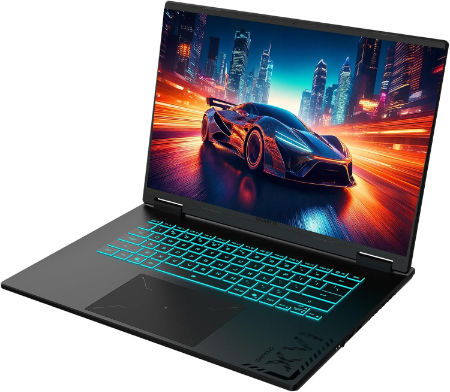
GIGABYTE GAMING A16 Ryzen 7 260 RTX 5070 16 inch WQXGA 165Hz |
|
|---|---|
 Check This On Amazon |
|
| CPU | AMD Ryzen 7 260, 8 cores, 16 threads, up to 5.1 GHz |
| GPU | NVIDIA GeForce RTX 5070 Laptop GPU, 8GB GDDR7 |
| Display Size | 16 inch, 16:10 |
| Display Resolution | WQXGA 2560 × 1600 IPS, 165Hz, 3ms, 100% sRGB, 400 nits typical |
| RAM | Up to 64GB DDR5 5600MHz, 2 SO DIMM slots |
| Storage Space | Up to 4TB PCIe NVMe SSD, one PCIe Gen4 x4 and one Gen4 x2 M.2 slot |
| Operating System | Windows 11 Home or Windows 11 Pro |
| Ports | USB4 Type C with DisplayPort 1.4 and Power Delivery 3.0, USB Type A 3.2 Gen 1, USB Type A 2.0, HDMI 2.1, RJ45 Ethernet, 3.5mm audio combo, DC in |
| Dimensions (L x W x H) | 10.33 × 14.11 × 0.77 to 0.90 inches (depth × width × height) |
| Weight | 4.85 lb (approximately 2.2 kg) |
| Pros | High resolution 165Hz display with full sRGB coverage; RTX 5070 graphics; expandable memory and storage. |
| Cons | Gaming performance consumes significant battery power |
GIGABYTE GAMING A16 Ryzen 7 260 RTX 5070 16 inch WUXGA 165Hz |
|
|---|---|
Check This On Amazon |
|
| CPU | AMD Ryzen 7 260, 8 cores, 16 threads, up to 5.1 GHz |
| GPU | NVIDIA GeForce RTX 5070 Laptop GPU, 8GB GDDR7 |
| Display Size | 16 inch, 16:10 |
| Display Resolution | WUXGA 1920 × 1200 IPS, 165Hz, 300 nits typical |
| RAM | Up to 64GB DDR5 5600MHz, 2 SO DIMM slots |
| Storage Space | Up to 4TB PCIe NVMe SSD, one PCIe Gen4 x4 and one Gen4 x2 M.2 slot |
| Operating System | Windows 11 Home or Windows 11 Pro |
| Ports | USB4 Type C with DisplayPort 1.4 and Power Delivery 3.0, USB Type A 3.2 Gen 1, USB Type A 2.0, HDMI 2.1, RJ45 Ethernet, 3.5mm audio combo, DC in |
| Dimensions (L x W x H) | 10.33 × 14.11 × 0.77 to 0.90 inches (depth × width × height) |
| Weight | 4.85 lb (approximately 2.2 kg) |
| Pros | High refresh display; RTX 5070 graphics; upgradeable memory and dual M.2 storage options. |
| Cons | Lower resolution and narrower color coverage than the WQXGA display option; battery life is limited under use |
GIGABYTE GAMING A18 PRO Core 7 240H RTX 5080 18 inch WQXGA 165Hz |
|
|---|---|
 Check This On Amazon |
|
| CPU | Intel Core 7 240H, 10 cores, 16 threads, up to 5.2 GHz |
| GPU | Up to NVIDIA GeForce RTX 5080 Laptop GPU, 16GB GDDR7, up to 115W graphics power |
| Display Size | 18 inch, 16:10 |
| Display Resolution | Up to WQXGA 2560 × 1600 IPS, 165Hz, 3ms, 100% DCI P3, 300 nits typical |
| RAM | 32GB LPDDR5X 5600MHz onboard memory |
| Storage Space | Up to 4TB PCIe NVMe SSD, 2 PCIe Gen4 x4 M.2 slots |
| Operating System | Windows 11 Home or Windows 11 Pro |
| Ports | HDMI 2.1, USB Type C with DisplayPort 1.4 and Power Delivery 3.0, USB Type A 3.2 Gen 1, USB Type A 2.0, RJ45 Ethernet, 3.5mm audio combo, DC in |
| Dimensions (L x W x H) | 11.55 × 15.89 × 0.79 to 0.98 inches (depth × width × height) |
| Weight | 6.39 lb (approximately 2.9 kg) |
| Pros | Very large high refresh display; up to RTX 5080 graphics; large screen is suitable for gaming, editing and multitasking. |
| Cons | Bulky for travel |
GIGABYTE GAMING A18 Ryzen 7 260 RTX 5070 18 inch WQXGA 165Hz |
|
|---|---|
Check This On Amazon |
|
| CPU | AMD Ryzen 7 260, 8 cores, 16 threads, up to 5.1 GHz |
| GPU | NVIDIA GeForce RTX 5070 Laptop GPU, 8GB GDDR7 |
| Display Size | 18 inch, 16:10 |
| Display Resolution | WQXGA 2560 × 1600 IPS, 165Hz, 3ms, 100% DCI P3, 300 nits typical |
| RAM | Up to 64GB DDR5 5600MHz, 2 SO DIMM slots |
| Storage Space | Up to 4TB PCIe NVMe SSD, one PCIe Gen4 x4 and one Gen4 x2 M.2 slot |
| Operating System | Windows 11 Home or Windows 11 Pro |
| Ports | USB4 Type C with DisplayPort 1.4 and Power Delivery 3.0, USB Type A 3.2 Gen 1, USB Type A 2.0, HDMI 2.1, RJ45 Ethernet, 3.5mm audio combo, DC in |
| Dimensions (L x W x H) | 11.55 × 15.89 × 0.79 to 0.98 inches (depth × width × height) |
| Weight | 6.17 lb (approximately 2.8 kg) |
| Pros | Large 18 inch high refresh screen; RTX graphics; upgradeable DDR5 memory and dual SSD slots. |
| Cons | Heavy chassis; 300 nit panel may be less visible in bright conditions; RTX 5070 has 8GB VRAM. |